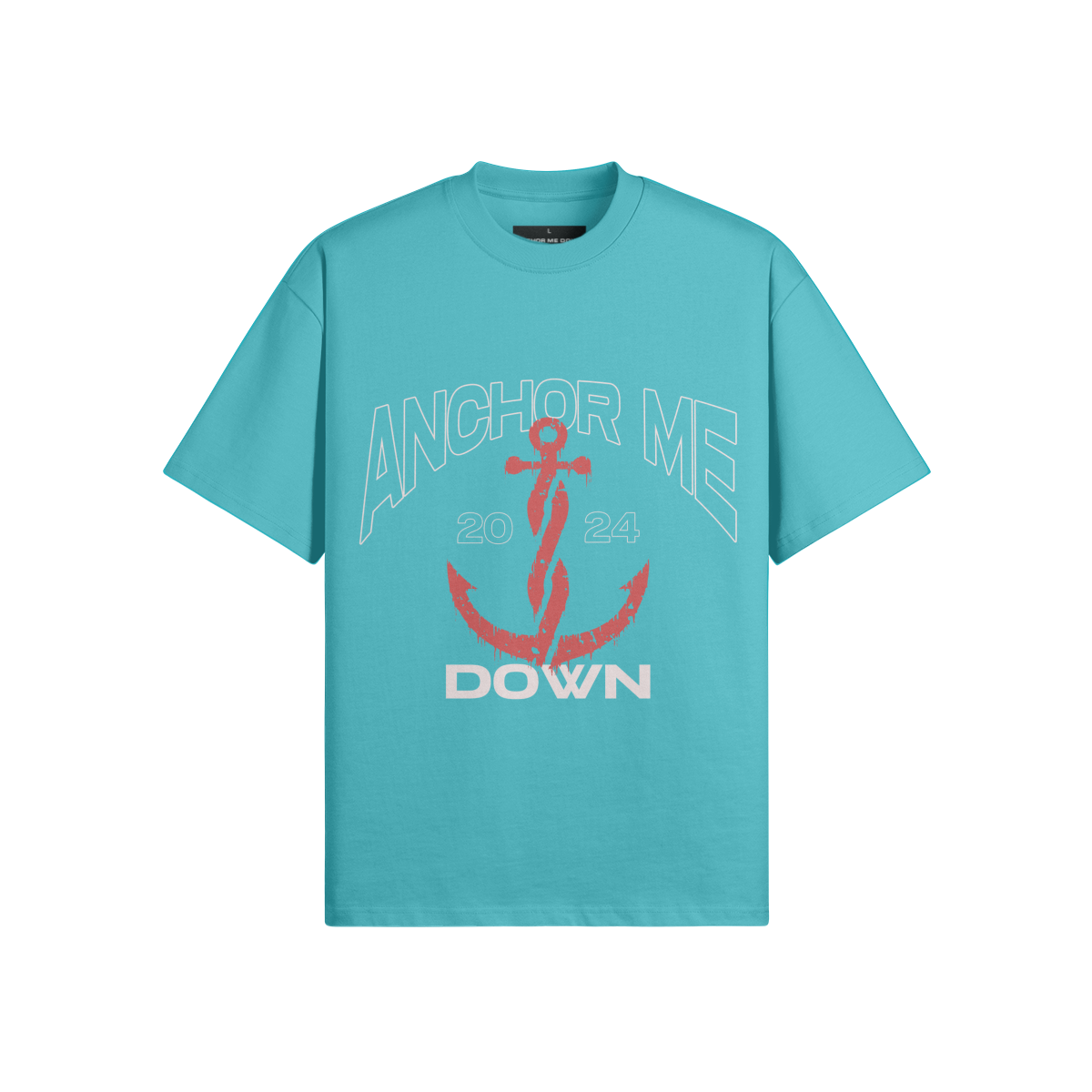
Wednesday afternoon, seven days before the Fort Lauderdale International Boat Show opens on October 28, and here is the part of show week nobody puts in the brochure: it does not end at sunset. The docks run hours past last light — cooler air off the water, a breeze with nothing left to prove, and everybody still standing around the machines. That is where a lightweight tee clocks out. It was built for noon. By nine it is thin, cool, and done, and you are the one who feels it. A heavyweight tee was built for the whole arc of the day. The heaviest tee in the game. Built between the iron and the water. Stay Anchored.
Quick answer: Generally, yes — modestly. A heavyweight tee puts far more fabric between you and the evening air than a typical far less fabric lightweight tee, so it slows how fast you feel the temperature drop after sunset, in dock breeze, and in the cooldown after training. Honest limits: a cotton tee is not a jacket or a fleece, wet cotton loses warmth fast, and on a warm Florida afternoon the difference barely matters. The gap shows up after dark — which is exactly when show week is still going.
Why light tees go cold so fast
Warmth from a single layer is mostly about how much material stands between your skin and moving air. A lightweight tee has very little: thin yarn, an open, airy knit, and almost no mass. While the sun is up and you are moving, you never notice. The moment you stop — last set done, engine off, standing on a dock after sunset — your body is producing less heat, the air off the water is cooler than the air over land, and that thin layer gives the breeze a straight path in and your warmth a straight path out. The shirt does not get colder than any other shirt. It just stops pretending to be a barrier.
What heavyweight actually changes
Weight is mass, and mass is time. A heavyweight fabric carries roughly two to three times the material in the weave of a lightweight tee, woven into a denser surface. That changes three things after dark. First, there is simply more fabric for cool air to get through, so the evening drop reaches your skin more slowly. Second, the denser knit cuts the breeze better than an open lightweight knit — the same reason our tees flap less in wind. Third, heavy fabric holds the day's shape against your body instead of clinging when it cools, so it never turns into the damp, cold sheet a light tee becomes in a cooldown. None of this makes a tee a winter layer. It makes it an all-day one.
The first dock night test
Do not grade a tee at noon. Grade it at the last hour it has to work. Three of ours are built for that full arc:
Lake Days — heavyweight, $60, XS–2XL. The water-day tee that is still a real shirt when the light is gone and the air off the lake turns.
Anchor Standard — heavyweight, $60, XS–2XL. The standard for a reason: dawn session, dock day, dock night, one tee, no costume changes.
College Special — heavyweight, $60, XS–2XL. Built between the iron and the water, and built to still feel like something at hour ten.
Browse the full rotation in our t-shirts collection. Most brands hide their fabric weight. We publish ours on every page — because the number is the whole point.
When heavy is not the whole answer
Honesty is part of the standard. On a hot Florida afternoon, a heavyweight tee is not the cooler choice — we have written plainly about heavyweight tees in Florida heat. If a tee is soaked, cotton of any weight will feel cold, so change out of a wet shirt rather than asking it to warm you. And for genuinely cold nights, a tee of any weight is a base, not outerwear — layer over it. What heavyweight owns is the long middle: the hours after sunset, the breeze off the water, the walk back after training, when light tees have quietly quit.
Show week runs after dark
FLIBS runs October 28 to November 1 in Fort Lauderdale, and the best hours on those docks are the late ones. Our giveaway closes the same week: 5 winners, free heavyweight tees, named November 1 — the last day of show week. When it's gone, it's gone. Get your name on the board on the giveaway page, and show up in a shirt that stays on shift after the sun does not.
FAQ
Does a heavier t-shirt really keep you warmer?
Modestly, yes. More fabric mass and a denser knit slow heat loss and cut breeze better than a thin tee, so you feel the evening temperature drop later and less sharply. It is a real difference, not a thermal one — no t-shirt replaces a jacket in real cold.
Why does a lightweight tee feel cold after a workout?
When you stop training, you produce less heat, and a thin, sweat-damp layer has almost no mass to buffer the change. It cools against your skin quickly. A heavyweight tee's extra fabric slows that swing, though changing out of any soaked shirt is still the smartest move.
Is a heavyweight tee too warm for a Florida evening?
For most people, no — October evenings in Fort Lauderdale are exactly the conditions heavyweight fabric suits: warm days giving way to cooler, breezy nights on the water. Midday heat is the harder case for heavy fabric, and there the honest answer is that lighter can feel cooler.
What counts as heavyweight in a t-shirt?
There is no regulated definition, which is why so many brands use the word without printing a number. Anchor Me Down heavyweight tees are heavyweight, published on every product page. If a brand will not tell you the weight, that silence is your answer.
The heaviest tee in the game. Built between the iron and the water. Stay Anchored.