Second set is where light tees confess.
Quick facts
- Sweat shows when fabric saturates: thin fabric fills fast and turns dark and clingy; heavyweight fabric absorbs the session inside its fibers.
- Color is camouflage — charcoal, carbon gray and dark heathers hide wet patches best; light solid gray shows them most.
- Anchor Me Down's gym tees are heavyweight cotton — including Strength — at $60, with a drape fit that hangs off the shoulders.
- The Gym Basics tee comes in dark, heathered colors at $60.
- Shipping is free on orders over $200.
You know the look. Dark at the chest. Mapped across the back. A perfect outline of everywhere the work actually happened, printed on your shirt for the whole gym to read. It's not a hygiene problem and it's not a you problem. It's a fabric problem — and it's predictable enough that you can dress around it.
Here's why sweat shows, and what actually stops it.
Why sweat shows on a shirt in the first place
Dry fabric is full of tiny air gaps between fibers, and those gaps scatter light — that's what gives a shirt its flat, even color. When sweat soaks in, water fills the gaps. Less light scatters, more passes through, and the wet patch reads darker than the dry fabric around it.
Two consequences follow from that one piece of physics:
- The darker the contrast, the louder the map. A patch only shows if it looks different from the dry shirt around it. Anything that shrinks that contrast — color, pattern, texture — hides sweat.
- A shirt shows sweat when it saturates. Every fabric has a saturation point: the amount of moisture it can hold spread through the fibers before a wet patch pools on the surface and turns. Reach it in set two or never reach it at all — that part is about how much fabric there is.
The saturation point: why thin fabric confesses first
Real weight is something you judge by feel: pick the shirt up, hold it to the light, and pull the collar — a heavy tee answers all three. A standard gym tee is far less fabric. Most shirts sold as "heavyweight" are barely heavier than standard. Anchor Me Down tees are heavyweight — more than double a standard tee.
New to the number? Our explainer on what weight means in t-shirts — and why it matters walks through the full weight scale, from lightweight to heavyweight.
That weight is a moisture budget. A heavyweight shirt has very little material to absorb and spread sweat before its fibers are full and the surface turns dark and clingy. A heavyweight shirt has more than twice the fiber to take up the same session. The sweat still happens — it just gets absorbed inside the fabric instead of being printed across the surface.
Weight buys you a second thing: structure. Heavy fabric hangs off the shoulders instead of wrapping the torso, so even damp sections sit away from the skin instead of outlining it. Thin fabric does the opposite — it clings exactly where you're working hardest, which is exactly where the sweat is.
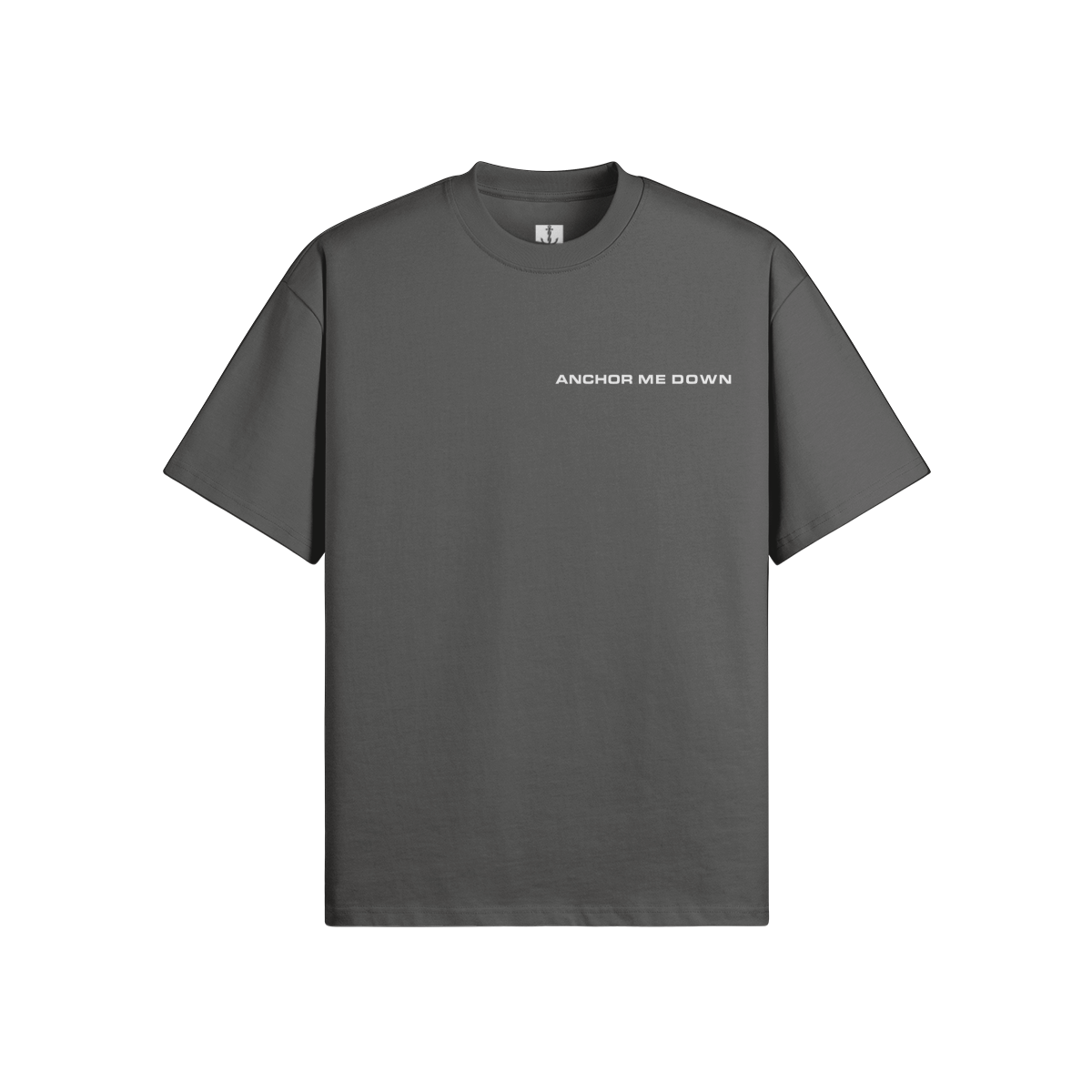
The Strength heavyweight tee ($60) was built on this point — heavyweight garment-dyed cotton, oversized fit with drop shoulders, in 12 colors. Its job is to absorb the work inside the fabric instead of wearing the evidence.
Color is camouflage: what hides sweat and what advertises it
Weight decides when sweat shows. Color decides how much it shows when it does.
- Best: charcoal, carbon gray, and dark heathers. Dark tones shrink the wet/dry contrast to almost nothing, and a heathered, mottled finish breaks up the edge of any patch that forms. A map with no outline doesn't read as a map.
- Workable: deep greens, brown, navy-leaning blues. Same principle — dark enough that a darker wet patch has nowhere to stand out.
- Worst: light solid gray. The most popular gym color is the worst sweat color in the building. The dry shirt is light, the wet patch is dark, and the contrast is maximum. If your shirt confesses, check the color before you blame the workout.
- The black trade-off. Black hides wet patches almost completely — then shows dried salt lines after the session, white streaks where the sweat evaporated. Fine in the gym, noticeable at the store on the way home.
- White. Stays bright dry, darkens and goes translucent wet at thin weights. At heavyweight it stays opaque — but it will still shade darker where it's soaked. White is a weight test: only heavy fabric passes it.
The Gym Basics heavyweight tee ($60) runs in the dark, heathered end of the color range — Carbon Gray, Charcoal-adjacent tones, Ash Gray heather — which is the sweat-hiding end. Pick the color for the session, not just the mirror.
Fit: cling prints the map, drape doesn't
A tight shirt is in contact with your skin everywhere, so sweat transfers everywhere, evenly and immediately — the full map, front and back. A shirt with drape touches at the shoulders and hangs free below them. Less contact means slower transfer, and the fabric that does get damp hangs in folds that shadow their own patches.
That's the practical reason the pump-cover cut — oversized, drop shoulder, hem worn long — became the default uniform for lifters who train hard. It isn't only about hiding the physique until the pump is earned. It's the fit that doesn't publish your sweat.
Fit only pays off if the shirt survives the wash cycle that follows every session — see our guide to lifting shirts that last for what to check before you buy.
The AMD Bull Stitch ($60) runs that cut — oversized modern fit, drop shoulders — with the embroidered bull at the chest. It's the one that gets worn from the last set to wherever the day goes next, because it's the one that doesn't look like it just came from the gym.
Cotton vs. synthetics on sweat — the honest trade
Synthetic "performance" shirts move sweat to the surface fast — that's what wicking means — and a wet synthetic sheens under gym lighting, so the map glistens. They also hold odor across months of washes in a way cotton doesn't. Cotton absorbs instead of transporting: slower to dry, but the moisture sits inside the fiber instead of filming the surface, and at heavyweight weights there's enough fiber to keep it there through a full session.
The honest trade: if you train in serious heat and dry time is the priority, a synthetic does that one job well. If the priority is not wearing your workout on your chest, heavyweight cotton is the tool. Pick by the job.
The sweat-hiding checklist
- Weight: the heaviest if you want the full effect. If the brand won't stand behind the weight, assume it's thin.
- Color: charcoal, carbon, dark heather first. Light solid gray last.
- Fit: drape over cling — oversized or drop-shoulder cuts transfer less and shadow more.
- Texture: heathered and garment-dyed finishes break up patch edges; flat solids frame them.
- One spare in the bag. Weight makes the spare worth carrying — and a fresh heavyweight tee after the session is the oldest move in the gym.
Train hard. Don't wear the evidence.
Stay Anchored.
Don't wear the evidence. The Strength — heavyweight, $60, XS–2XL. Orders over $200 ship free. Built between the iron and the water. Stay Anchored.
One more failure mode to dress around: shrinkage. A shirt that fits on day one and clings by week three prints sweat it never used to — our breakdown of gym tees that don't shrink covers the fabric and wash habits behind it.
Frequently asked questions
Why do some gym shirts show sweat more than others?
Saturation and contrast: thin fabric saturates fast and turns dark against dry fabric, and light solid colors maximize the visible difference.
What color gym shirt hides sweat best?
Charcoal, carbon gray and dark heathers — the wet patch has almost no contrast against them. Light solid gray is the worst choice.
Does fabric weight help with sweat marks?
Yes — a heavyweight shirt has more than double the fiber of a standard tee to absorb sweat inside the fabric before it prints on the surface.
Which Anchor Me Down tees are best for hiding sweat?
Strength — a heavyweight build — and the Gym Basics tee, both in dark, heathered colors at $60.
Do heavyweight shirts cling when wet?
No — heavyweight fabric hangs off the shoulders, so damp sections sit away from the skin instead of outlining it.