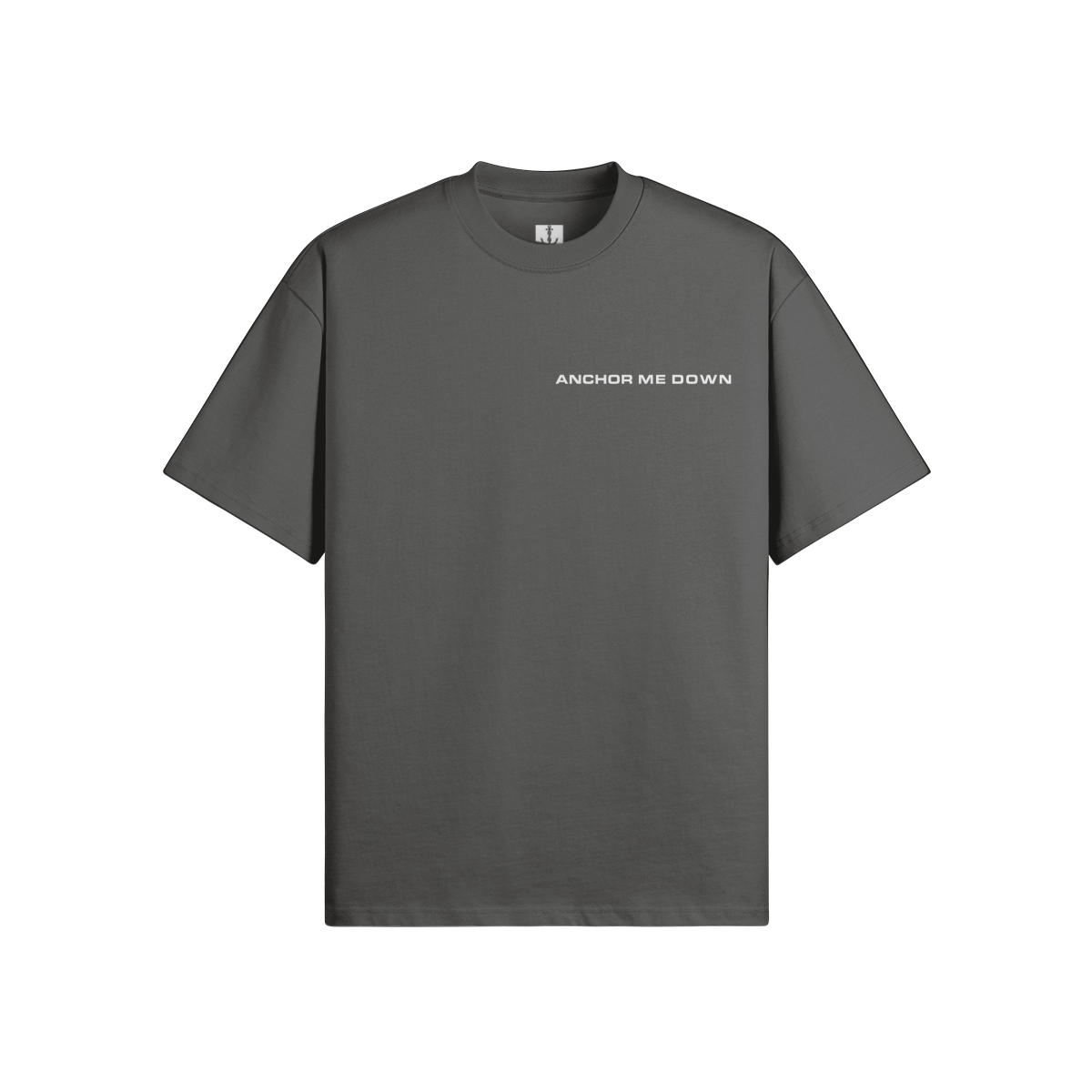
Thursday morning, six days out. The rail is out, the dawn session is done, and every tee in the house is getting graded before show week — Fort Lauderdale, October 28 to November 1 — because the docks don't grade on intentions. This is the morning most guys discover the word "heavyweight" on their tags was doing a lot of heavy lifting that the fabric never did. So here is the test we run, the same one you can run in your own kitchen: how to tell whether a t-shirt is really heavyweight, or just wearing the adjective.
Quick Answer
Real weight is something you judge by feel: pick the shirt up, hold it to the light, and pull the collar — a heavy tee answers all three. Anchor Me Down tees are heavyweight, printed on every product page. If a brand won't give you a number, run the three physical checks: (1) the scale — a genuine heavyweight tee weighs noticeably more in the hand than a standard far less fabric tee of the same size; (2) the light test — hold it up to bright light stretched across your shoulders; a real heavyweight stays opaque; (3) the collar test — pull the neckline and let go; heavy fabric pulls back, light fabric stays stretched. A tee that passes all three is heavy. A tee that only passes the marketing copy is not.
Test 1: The Number — Or the Silence Where It Should Be
weight is not a vibe. It is not a vibe: pick the shirt up and your hands give you the answer. Most of the industry sells tees between roughly 130 and heavyweight and calls the top of that range "heavyweight." We publish heavyweight because the number is the whole argument — it can be checked by anyone, including you, including a competitor. When a brand answers a weight question with words like "premium," "substantial," or "quality feel" and no number, that silence is the answer. The number they're hiding is the story.
Test 2: The Scale and the Hand
You do not need a lab. Pick the tee up. A heavyweight shirt carries roughly two to three times the cotton of a standard light tee, and your hand knows it before your brain does — there is drape, there is pull, there is something to fold. Fold both shirts and stack them: the real heavyweight sits higher and holds its fold. On a kitchen scale, the difference between a light tee and a true heavyweight of the same size is not subtle. It is the difference between a shirt and a rumour of one.
Test 3: Light and Collar — The Two Places Light Tees Confess
Stretch any tee across a bright window the way it stretches across your shoulders in a set, and thin fabric goes see-through. That is not a style flaw; it is arithmetic — there is not enough cotton in the path of the light. Then pull the collar. Collars are where cheap weight goes to die: a light neckline stays where you pulled it, wavy by the third wash. Heavy fabric at heavyweight pulls back, because there is enough material in the rib to recover. Run both tests on the rail this week and half of most wardrobes grade themselves out of show week.
The Show-Week Rail: Three That Pass
The three on our rail for October 28 to November 1 all carry the same build — heavyweight, $60, XS–2XL:
- Strength — the dawn-session anchor. Number on the page, collar that recovers, opaque under gym lights.
- College Special — the all-day dock shirt. Holds its line in wind off the water and still looks built at dinner.
- Anchor White Rock — the white tee that survives the light test in full Florida sun, which is exactly where white tees usually confess.
Browse the full rail in the t-shirts collection. And one closing date that matters more than any test: our giveaway board comes down November 1 — 5 winners, free heavyweight tees, named the last night of show week. Get your name on it at the giveaway page. When it's gone, it's gone.
FAQ
What counts as truly heavyweight?
There is no legal standard, which is exactly why the word gets abused. In practice, tees under heavyweight are light, far less fabric is midweight, and heavyweight and up is genuinely heavy. Ours are heavyweight — and we print the number so you never have to take the adjective on faith.
Can I check a tee's weight without a scale?
Yes. Use the light test and the collar test above: stretch it across bright light across the shoulders, then pull and release the neckline. Opacity plus collar recovery is a reliable field grade when no scale is handy — the same two tests we run on the rail.
Does a heavier tee always mean a better tee?
No — weight is proof of material, not a guarantee of construction. But it is the one claim you can verify yourself in ten seconds, and a brand that publishes its weight is a brand willing to be checked. That willingness is the tell.
Why do most brands not publish their weight?
Because most numbers would end the conversation. A published weight invites comparison; an adjective never does. We would rather be compared. Related reading: Do Heavyweight T-Shirts Hold Up Better to Saltwater and Spray Than Light Ones? and Do Heavyweight T-Shirts Take Longer to Dry Than Lightweight Ones?
The heaviest tee in the game. Built between the iron and the water. Stay Anchored.