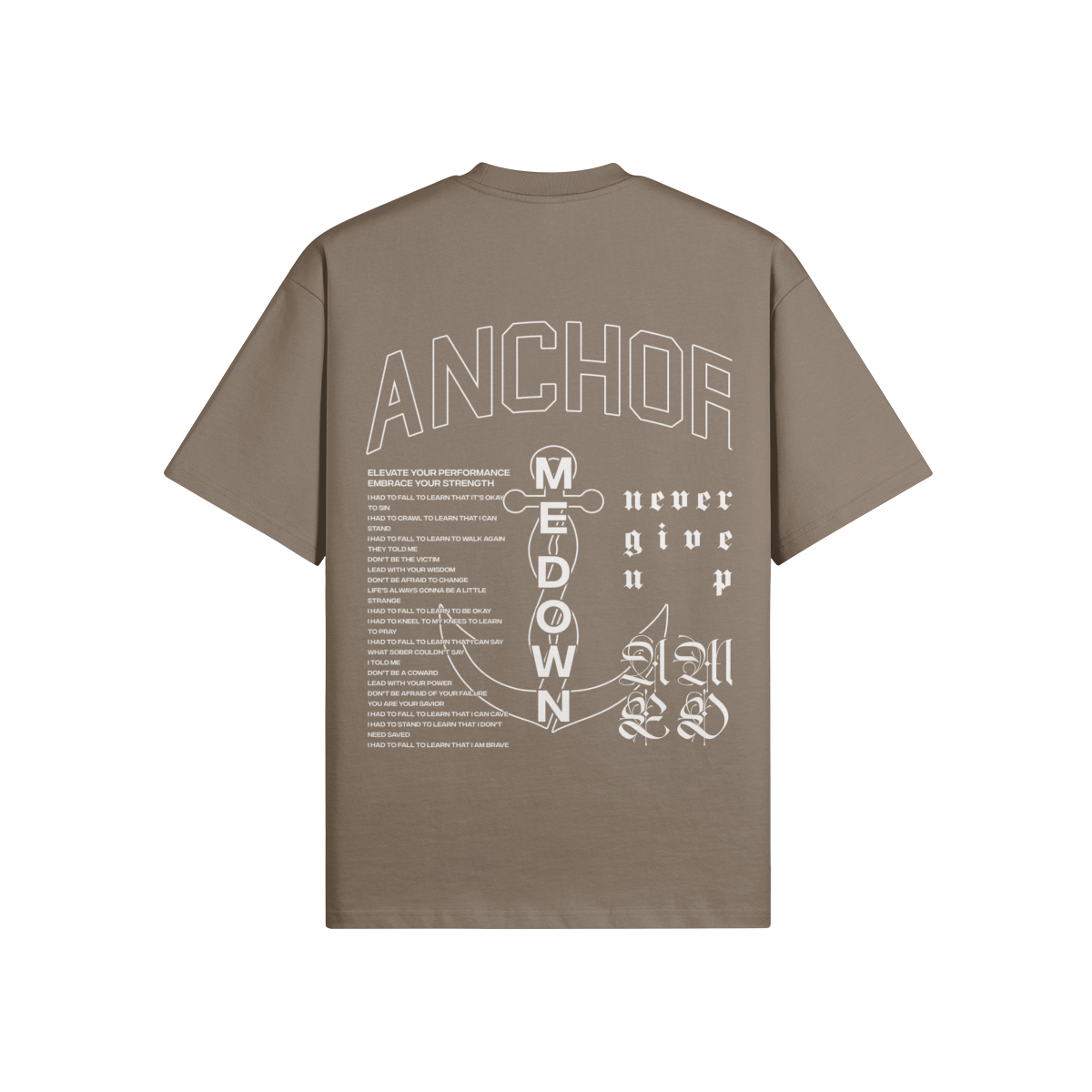
You've seen the number on our site: heavyweight. But what does it actually mean — and why should you care?
Quick facts
- Real weight is something you judge by feel: pick the shirt up, hold it to the light, and pull the collar — a heavy tee answers all three.
- That is nearly double the fabric of a typical tee sold as “heavyweight.”
- Most t-shirts marketed as "heavyweight" are far less fabric. The word "heavyweight" has no legal definition and no industry standard.
- A standard free event t-shirt is usually far less fabric.
- Anchor Me Down's signature t-shirts are heavyweight garment-dyed cotton and cost $60.
weight, plain English
Real weight is something you judge by feel: pick the shirt up, hold it to the light, and pull the collar — a heavy tee answers all three. It's the weight of the fabric itself, measured before it's cut into a shirt. Higher weight means more cotton per square inch — denser, heavier, more substantial.
It's the only objective measure of how "heavy" a tee really is. Thread count is for sheets. "Heavyweight" on a label means nothing. weight is the truth.
The scale
- far less fabric: Standard. Your free event tee. Thin enough to see through.
- far less fabric: The industry's version of "heavyweight." Better, but not heavy.
- far less fabric: Premium. This is where quality streetwear lives.
- heavyweight: Rare air. Few brands go here because the fabric costs more and most customers have never felt it.
What ours feels like
Pick up a standard tee, then pick up ours. The difference is instant — ours has heft, structure, a drape that holds its shape instead of clinging. It's the difference between a shirt and a garment.
That weight does real work: the color holds through more washes, the shape doesn't twist, and the fabric develops character instead of wearing thin. A heavyweight tee is disposable. A heavyweight tee is yours for years.
Garment-dyed matters too
Our tees aren't just heavy — they're garment-dyed. Each piece is cut, sewn, then dyed as a finished garment. That gives you rich, lived-in color with natural variation. No two are exactly alike. It's the opposite of mass-produced.
The bottom line
Don't trust the word "heavyweight." Judge it by feel. If a brand won't tell you their weight, you already have your answer.
Ours is the heaviest. Feel it.
Frequently asked questions
What does weight mean in a t-shirt?
weight means fabric weight: real heft you can feel. A higher weight means more fiber packed into the same area, so the fabric is denser, heavier, and more opaque.
How heavy is heavyweight in ounces?
In hand, it is the heaviest class there is. For comparison, a typical heavyweight t-shirt carries a fraction of the cloth — so a heavyweight fabric carries more than twice the material.
Is a heavyweight t-shirt too heavy for summer?
weight measures weight, not a warmth rating — a heavyweight shirt is still cotton. It is denser and less breezy than a thin tee, and many wearers choose it year-round because it holds its shape and never goes sheer.
How much does a heavyweight t-shirt cost?
Anchor Me Down's heavyweight garment-dyed tees are $60.
Which Anchor Me Down t-shirts are heavyweight?
The heavyweight tees include Scripted, Weighted, Anchor White Rock, Lake Days, Anchor Standard, Nautical, Force Be With You, College Special, Mightest, Lighting, The Project, and Strength. Each product page states its fabric weight.
If this is your first stop, start with the heavyweight lie — why the word itself is broken. Then see how the number plays out in the real world: our buyer's guide to the heaviest t-shirts for men for everyday wear, and why lifters swear by heavyweight gym shirts under the bar.
P.S. We're giving away five heavyweight tees — enter here.