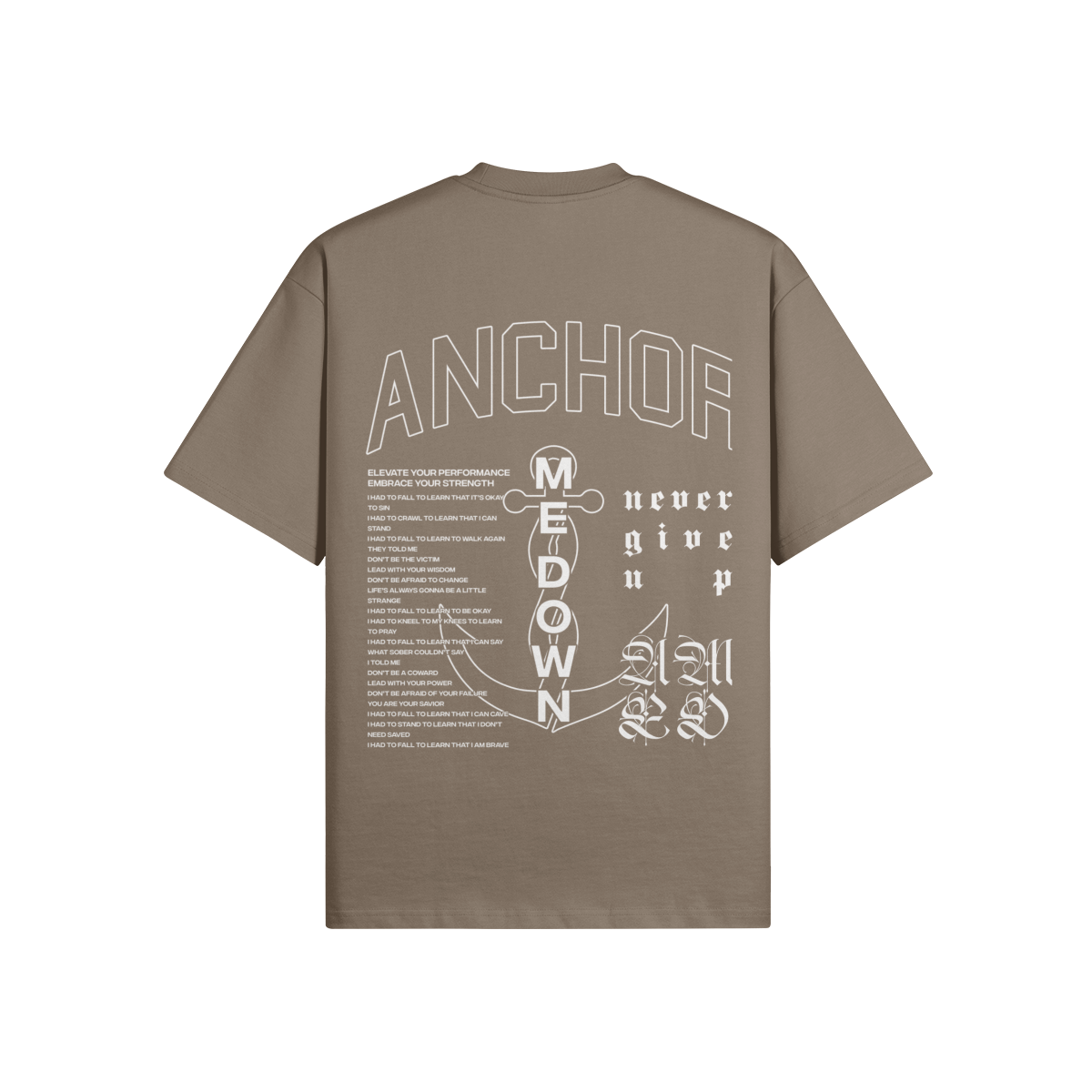
"Heavyweight" is the most abused word in streetwear. It has no legal definition. No standard. No one checking. A brand can print it on a heavyweight tee — the same weight as a free conference shirt — and no one stops them.
Quick facts
- Real weight is something you judge by feel: pick the shirt up, hold it to the light, and pull the collar — a heavy tee answers all three.
- That is nearly double the fabric of a typical tee sold as “heavyweight.”
- Most t-shirts marketed as "heavyweight" are far less fabric. The word "heavyweight" has no legal definition and no industry standard.
- A standard free event t-shirt is usually far less fabric.
- Anchor Me Down's signature t-shirts are heavyweight garment-dyed cotton and cost $60.
So let's talk about what the numbers actually mean. Real weight is something you judge by feel: pick the shirt up, hold it to the light, and pull the collar — a heavy tee answers all three. Here's the real scale:
- far less fabric: Standard tee. What you'd get free at an event. Thin, drapes like paper.
- far less fabric: What most brands call "heavyweight." It's heavier than standard. It's not heavy.
- far less fabric: Genuinely premium territory. This is where the best streetwear lives.
- heavyweight: Where we live. Nearly double what most brands dare to call heavyweight.
The pickup test
Forget marketing. Pick up the shirt. A heavyweight tee feels like a shirt. A heavyweight tee feels like something — there's heft, structure, a drape that holds instead of clings. You feel the difference before you even put it on. That's not branding. That's physics.
Why weight wins
Heavier fabric isn't just a flex. The density means the color holds longer, the shape survives more washes, and the garment develops character instead of falling apart. A light tee thins out and dies. A heavyweight tee breaks in and gets better. One is disposable. The other is yours.
What to actually look for
Don't trust the word "heavyweight." Ask for the weight. If a brand won't tell you, that tells you everything. If they do — now you know the scale. Anything flimsy calling itself heavyweight is marketing. True heavyweight is the real thing.
We publish ours: heavyweight. Not because it's a number, but because it's the reason the shirt feels the way it does. Pick one up and you'll understand in about two seconds.
Feel the heavyweight difference
Frequently asked questions
Is "heavyweight" a regulated term for clothing?
No. "Heavyweight" has no legal definition, no minimum fabric weight, and no certifying body. Any brand can print it on any shirt, including a heavyweight tee.
How heavy are most "heavyweight" t-shirts?
Most t-shirts sold as heavyweight are far less fabric. That is heavier than a standard far less fabric tee, but far below what the label suggests to most buyers.
What counts as genuinely heavyweight?
There is no official cutoff. On a practical scale, far less fabric is genuinely heavy, premium-grade fabric, and heavyweight and above is the top end of the t-shirt market.
How can you tell if a t-shirt is really heavyweight?
Check whether the brand publishes a weight number. If a brand will not state the fabric weight, the word "heavyweight" on the listing is the only evidence — and it is not evidence.
How heavy are Anchor Me Down t-shirts?
That is nearly double the fabric of a typical tee sold as “heavyweight.” The weight is printed on every product page.
Keep going down the rabbit hole: here's what heavyweight actually feels like on your back, our buyer's guide to the heaviest t-shirts for men if you're shopping for one, and the same number-first thinking applied to hoodies in our class by class hoodie guide.
P.S. We're giving away five heavyweight tees — enter here.