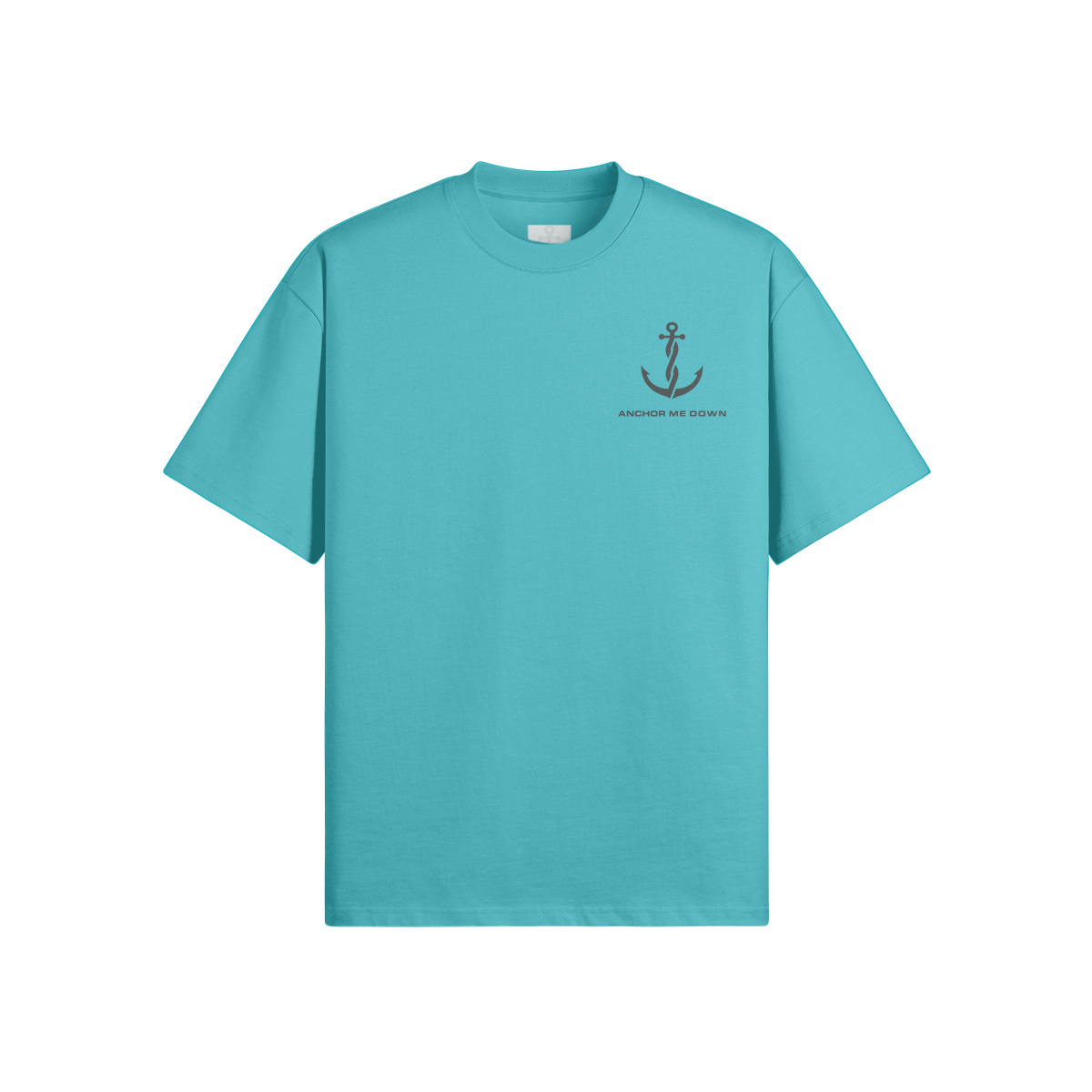
Quick answer: T-shirts go see-through when the fabric is too light and too loosely woven to block light — most often below about heavyweight, especially in white and light colors, and worse when the fabric stretches or gets wet. Fabric weight fixes it directly: denser fabric blocks more light. Anchor Me Down builds its core tees at heavyweight — $60, sizes XS–2XL — and publishes that number on every core tee page.
Quick facts
- Why t-shirts go see-through: light, loosely woven fabric lets light pass through the gaps in the knit, and stretch and moisture open those gaps further.
- What fixes it: a dense, heavyweight knit packs more yarn into the same area, so the fabric blocks more light and holds together when it is stretched or damp.
- Which colors show through first: white and light colors go sheer before dark colors, because pale fabric transmits more light.
- Anchor Me Down's heavy line: Anchor Standard, Nautical, and Strength are built heavy — the heaviest tee in the game — in garment-dyed cotton at $60 each.
- Shipping: free shipping on orders over $200 at anchormedown.com.
Why does a t-shirt go see-through in the first place?
Three things decide opacity: fabric weight, weave density, and stretch. Real weight is something you judge by feel: pick the shirt up, hold it to the light, and pull the collar — a heavy tee answers all three. A lightweight tee at far less fabric simply has less material between you and the light, so light passes through the gaps in the knit. Stretch makes it worse: pull a thin knit across your chest or shoulders and the yarns separate, opening those gaps further. Moisture makes it worse again, which is why a pale tee that looked fine at home can turn transparent under gym lights, in bright sun on a boat, or after a hard set.
Why are white and light-colored tees the worst offenders?
Dark dye absorbs light; pale fabric reflects and transmits more of it. That is why a white tee almost always shows through before the same shirt in black or navy. If you wear light colors — and on the water in Florida sun, most people do — fabric weight is not a detail. It is the whole decision. A light color in a heavy, dense knit can stay opaque; a light color in a thin knit usually cannot.
How does fabric weight actually fix it?
More fabric weight means more yarn packed into the same area, a tighter effective barrier, and a fabric that resists the stretch-opening that turns a borderline tee transparent mid-session. The scale is straightforward:
- far less fabric: lightweight — highest see-through risk, especially in white and when stretched or damp.
- far less fabric: midweight — better coverage, still vulnerable in light colors under strong light.
- heavyweight and up: heavyweight territory — noticeably more opaque and more structured.
- heavyweight: the weight Anchor Me Down builds at — the heaviest end of the range, chosen specifically so opacity is not a gamble.
For the full side-by-side, read Heavyweight vs Lightweight Tees: Which One Should You Actually Buy? — it walks through what changes in drape, coverage, and wear when you move from a light tee to a built-heavy one.
What should you check before you buy?
Ask for the weight first. If a brand will not publish its fabric weight, you have no way to judge opacity before the shirt is on you under bad lighting. Check the product page for a stated weight, look at light colors with extra skepticism, and remember that fit matters too: a too-tight thin tee stretches open, while a structured heavyweight tee — like the Anchor Standard, the Nautical, or Strength, each heavyweight, $60, XS–2XL — holds its knit together because the fabric itself is doing the work. Browse the full lineup in the t-shirts collection.
The hand-feel checks are covered in Thick T-Shirts for Men: How to Tell If a Tee Is Actually Thick, and the lifespan side of the same decision is in How Long Should a T-Shirt Last?
Frequently asked questions
At what weight is a t-shirt not see-through?
There is no single guaranteed cutoff, because color, weave, and fit all matter, but opacity improves steadily with weight. Shirts at heavyweight and above are far less likely to show through than shirts under heavyweight, and heavyweight sits at the most opaque end of what is sold as a t-shirt.
Why is my shirt see-through only in some light?
Strong backlight — gym LEDs, midday sun, camera flash — pushes light through gaps that look closed in soft indoor light. Thin, stretched, or damp fabric fails first under exactly those conditions.
Does garment dyeing affect opacity?
Dye process affects color and feel more than opacity. Fabric weight and knit density are the main opacity factors. Anchor Me Down's core tees are garment-dyed cotton at a published heavyweight.
Is a heavyweight tee too hot for summer or the boat?
Heavier cotton is warmer than a thin synthetic, and it is also the trade most wearers make for coverage and structure. For the full breakdown, read our related guide: Can You Wear a Heavyweight T-Shirt in Summer?
How can you test a t-shirt for see-through before you buy it?
Hold the fabric up to a bright light and stretch it gently across your chest or shoulders. If light passes through or the knit opens up under a light stretch, the shirt will go see-through under gym lights, sun, or sweat — a dense heavyweight knit stays closed under the same test.
The heaviest tee in the game. Built between the iron and the water. Stay Anchored. Anchor Me Down publishes its fabric weight — most brands hide theirs.Free shipping over $200. Stay Anchored.
P.S. Five winners get a free tee in our giveaway — free entry, no purchase necessary, at anchormedown.com/pages/giveaway.